
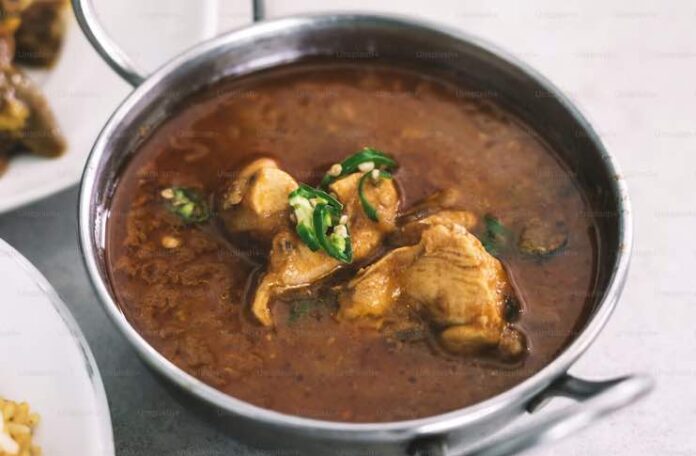
Anyone planning an Indian stall, a cloud kitchen, or a catering sideline in Metro Manila runs into the same question early: what makes the food taste like a restaurant and not like a home experiment? For a large family of North Indian dishes, the answer is a single blend. Kadai masala is the spice mix that gives kadai chicken and vegetable kadai their identity, and it is the reason a customer can tell your version from the one sold two carts down.
It is also one of the cheapest competitive advantages a small operator can build, because the blend is coarse, inexpensive, and almost impossible to copy by guesswork.
What Kadai Masala Is Made Of
The blend is deliberately rough. Instead of a fine powder, the spices are crushed coarsely so that fragments stay visible in the sauce and release flavor in waves as the dish cooks down.
Four ingredients do the work:
- Coriander seeds, which carry the bulk of the aroma
- Fennel seeds, for the sweet backnote that separates kadai dishes from a generic curry
- Dried red chilies, crushed rather than ground into dust
- Black pepper, for heat that sits differently on the tongue than chili heat
That is the whole structure. Kadai chicken gets much of its flavor and texture from this mix plus fresh tomatoes, which is also what distinguishes it from a jalfrezi built on tomato puree, cream, or a splash of soy sauce. Watch this video to learn more:
Grinding In-House or Buying the Blend
Both approaches work for a small food business operation, and the choice is mostly about labor and consistency rather than taste.
A batch you crush yourself can be stored in an airtight jar for several months, which means one prep session covers weeks of service. That is attractive when margins are thin and whole spices cost less per kilo than packaged blends.
Commercial blends solve a different problem. Ready mixes sold as vegetable kadai masala, and similar packs for palak paneer or methi mutter malai, come with printed instructions and give you the same spice balance every time no matter who is on shift. If you plan to hire and train staff quickly, that consistency is worth paying for.
Many small kitchens end up doing both: a house blend for the signature dish, packaged masala for the supporting menu items.
The Kadai Itself Decides How the Masala Behaves
Coarse spice fragments burn fast. A thin pan with hot spots will scorch the chilies and pepper in seconds, and scorched kadai masala turns the whole batch bitter. Once that happens, the pan isn’t a background purchase anymore; it is the reason you just threw out a batch of spice and the dish it was going into.
Tri-ply stainless steel is the usual answer. Three bonded layers, with food-grade steel on the cooking surface, aluminum in the middle to spread heat, and magnetic steel on the base, prevents the hot spots that burn the bottom of a curry while the top is still raw. Cast iron holds intense heat better for high-flame stir-frying and develops a natural non-stick surface over years, but it needs hand-washing and regular seasoning, which is a real daily cost when you are closing up late.
Once you know whether you are simmering gravies most of the day or searing at high heat, comparing actual models of kadai for Indian cooking by capacity, base thickness and handle type becomes the practical next step.
Matching Capacity to Service Volume
Size is a throughput decision, not a kitchen aesthetic one. A 2.5-liter pan suits small batches and saves counter space, which matters on a cart. Around 4 quarts, roughly 3.8 liters, handles a family-sized portion and lets you cook ahead. Deeper 4-liter bodies, often 28cm across with a 3mm tri-ply wall, are built for six or more servings at a time, and some run as wide as 34cm.
Smaller pans heat faster. Larger ones hold heat better once loaded, which is what you want during a lunch rush.
Cooktops, Lids and Handles
If your cart runs on induction, the kadai needs a flat, magnetic base. Hold a magnet to the bottom before buying. Tri-ply stainless works on induction, though it ramps up more gradually than on gas, and cast iron needs preheating.
Glass lids let staff check a simmering gravy without lifting, but they fog. Stainless lids last longer and fog less, which suits high-heat work. For handles, rosewood stays cooler in the hand through long service but must be hand-washed and can split; stainless handles get warm but survive almost anything. Traditional side loops are safer than a long protruding handle when someone is lifting a full, hot pan.
Keeping Costs Predictable
Stainless steel is not naturally non-stick. Staff need to preheat the pan for two to three minutes, wait for the oil to shimmer, and leave food alone until it releases on its own. Food that sticks gets scraped, and scraped food means waste and a scratched pan.
Clean with warm soapy water and a soft sponge, never steel wool. Boil water in the pan to lift anything stubborn. Hand-washing extends the life of a tri-ply kadai well beyond what the dishwasher cycle will.
One caveat before you scale: taste your stored kadai masala every few weeks. Coarse-crushed spice loses its punch faster than you expect in humid conditions, and a dish that quietly drifts off-flavor costs you repeat customers long before anyone complains. Finally, watch this lovely story of how a son saves his parents Indian restaurant:

Arun is an avid blogger and business expert. He’s been in business from the moment he finished school and hasn’t stopped growing ever since.